

Explore how stainless steels perform under thermal stress and corrosion in this self-paced engineering module.
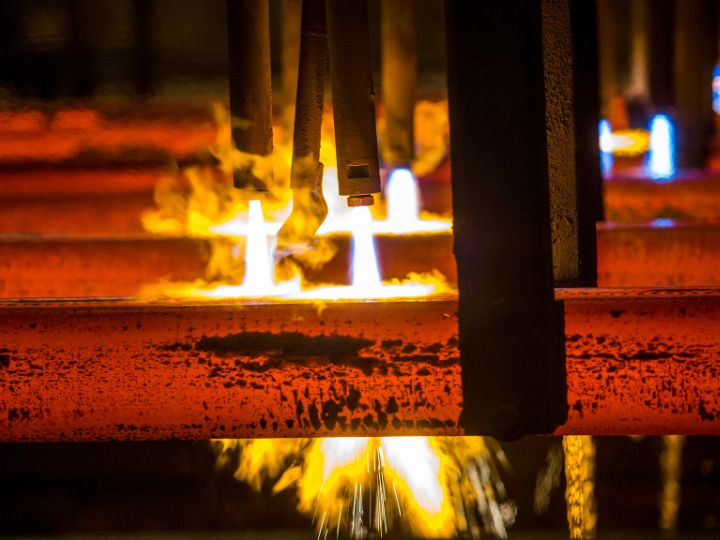

High-Temperature Characteristics of Stainless Steel
Full Code
APP0408NI205
Module Type
E-learning
Description
None
What you will learn
• Understand the fundamental factors influencing stainless steel performance at elevated temperatures, including service life, allowable deformation, environmental effects, and cost considerations in material selection.
• Explain the key mechanical behaviors of stainless steels under high-temperature service, such as short-time tensile strength, creep, and creep-rupture, and how these properties affect design stresses and safe operating limits.
• Differentiate between stainless steel types and grades used in high-temperature applications, including the significance of “H” and “N” designations, carbon and nitrogen control, and the relative performance of austenitic, ferritic, and martensitic families.
• Evaluate the effects of prolonged heat exposure on metallurgical stability, including softening, carbide precipitation, embrittlement (such as 885°F embrittlement), and grain-size effects on strength and ductility.
• Assess the corrosion and oxidation resistance of stainless steels at elevated temperatures, recognizing the roles of chromium, nickel, and silicon in improving scaling resistance and surface stability in air, steam, and process gases.
• Identify material behavior in specific high-temperature environments, such as sulfidation, carburization, hydrogen attack, ammonia exposure, and reactions with halogens or liquid metals, and select appropriate alloys for these conditions.
• Apply ASME and ASTM high-temperature design standards to determine allowable stresses, evaluate creep-rupture data, and ensure compliance with codes for pressure vessels and other high-temperature equipment.
Module content
Related Occupations
There are currently no related items to show.
Related Qualifications
There are currently no related items to show.